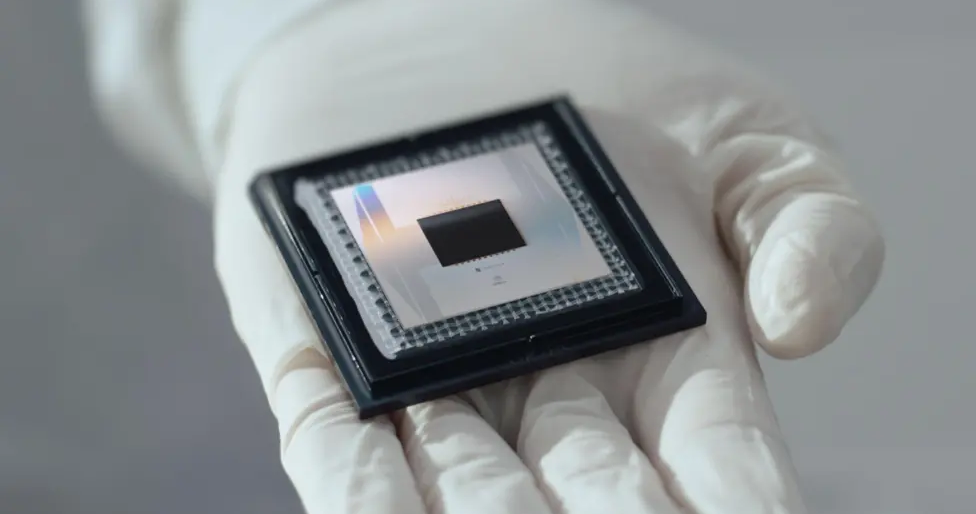
Google Offers Researchers Early Access to Willow Quantum Processor
Google, one of the world’s leading technology companies, has announced that it is giving researchers early access to its latest quantum processor, called Willow. This is a significant step in the field of quantum computing, which many experts believe could change the way we solve complex problems. In this article, we will explain what this announcement means, what the Willow processor is, why it is important, and how it may impact research and technology in the future.
What is Quantum Computing?
Before we talk about Willow, it’s important to understand what quantum computing is. Traditional computers, like the one you use at home, use bits to store information. A bit can either be a 0 or a 1. Everything a computer does, from opening a web page to playing a video, is based on combinations of 0s and 1s.
Quantum computers work differently. They use quantum bits, or qubits, which can be 0, 1, or both at the same time. This property is called superposition. It allows quantum computers to process much more information at once than traditional computers. Another key concept in quantum computing is entanglement, which lets qubits work together in ways that ordinary bits cannot.
Because of these unique properties, quantum computers can solve certain problems much faster than classical computers. For example, they may be able to:
- Break some forms of encryption faster than traditional computers.
- Simulate complex chemical reactions for drug discovery.
- Solve optimization problems in logistics, finance, and materials science.
What is the Willow Quantum Processor?
The Willow quantum processor is Google’s latest hardware for quantum computing. Google has been working on quantum processors for years, and Willow is the newest and most advanced version they have released to date.
Willow uses a type of qubit called a superconducting qubit. These qubits are made from special materials that can carry electricity without resistance at very low temperatures. This allows the qubits to maintain their quantum state for longer periods, which is essential for performing complex calculations.
Some of the key features of the Willow processor include:
- More Qubits – Willow has a larger number of qubits compared to Google’s previous quantum processors, meaning it can handle more complex calculations.
- Better Error Correction – Quantum computers are prone to errors because qubits are very sensitive. Willow includes improvements in error correction to make calculations more reliable.
- Faster Operations – The processor can perform operations more quickly, which helps researchers run experiments faster.
- Cloud Access – Google is offering early access to researchers through the cloud. This means scientists around the world can use Willow without needing to own a quantum computer themselves.
Why Early Access is Important
Giving researchers early access to Willow is a big deal for several reasons:
1. Accelerating Research
Quantum computing is still a very new field. By allowing researchers to use Willow, Google helps accelerate experiments and discoveries. Scientists can test new algorithms, explore new materials, or study chemical reactions using the processor.
2. Gathering Feedback
Early access allows Google to get feedback from real users. Researchers can report issues, suggest improvements, and help Google refine the hardware and software before it is widely released.
3. Collaboration and Innovation
Quantum computing is complex, and no single company or lab has all the answers. By giving access to researchers worldwide, Google encourages collaboration and sharing of knowledge. This can lead to breakthroughs faster than if everyone worked in isolation.
Who Can Access Willow?
Google has said that access will be limited to researchers and scientists working in academic institutions or research organizations. This early access is not for the general public or commercial businesses yet. The goal is to allow serious researchers to explore quantum computing applications and push the technology forward.
Researchers will use Google’s quantum computing platform, which allows them to run experiments on Willow through the cloud. This approach is convenient because setting up a quantum computer is extremely difficult and expensive. It requires special cooling systems, precise electronics, and advanced software.
Potential Applications of Willow
The Willow processor could help in many areas of science and technology. Some of the potential applications include:
1. Medicine and Drug Discovery
Quantum computers can simulate molecules and chemical reactions in ways classical computers cannot. This could lead to faster drug discovery, better understanding of diseases, and development of new materials for healthcare.
2. Climate and Energy
Researchers can use quantum computers to model complex climate systems or optimize energy grids. This could help in predicting extreme weather events, reducing energy waste, and designing better batteries.
3. Artificial Intelligence
Quantum computing may enhance artificial intelligence (AI) by speeding up machine learning algorithms. This can improve AI applications in fields like healthcare, finance, and autonomous vehicles.
4. Cryptography
Quantum computers have the potential to break certain types of encryption. By giving researchers access to Willow, Google also encourages the development of quantum-safe encryption methods to protect sensitive data.
Challenges in Quantum Computing
Even though the Willow processor is a major achievement, quantum computing still faces challenges:
- Error Rates – Qubits are fragile, and errors can occur during calculations. While Willow improves error correction, this remains a challenge.
- Scalability – Building processors with hundreds or thousands of qubits is still very difficult.
- Software Development – Quantum programming is different from classical programming, and new algorithms need to be developed.
- Cost and Access – Quantum computers are expensive to build and maintain, so access is currently limited to researchers and specialized companies.
How Google’s Move Compares to Others
Google is not the only company working on quantum processors. Other tech giants, like IBM, Microsoft, and Intel, also have quantum computing initiatives. However, Google’s strategy of offering early access to researchers is significant because it:
- Encourages global collaboration.
- Helps test the technology in real-world applications.
- Positions Google as a leader in the quantum computing field.
The Future of Quantum Computing
The release of Willow to researchers is just one step toward a future where quantum computing may become more common. Experts predict that in the next decade, quantum computers could:
- Work alongside classical computers to solve problems faster.
- Transform industries such as healthcare, finance, and logistics.
- Enable breakthroughs in fundamental science that were previously impossible.
By giving researchers early access, Google is helping lay the foundation for this future.
Conclusion
Google’s announcement about the Willow quantum processor marks an important milestone in the field of quantum computing. By offering early access to researchers, Google is enabling scientists to explore new possibilities, test innovative algorithms, and collaborate globally. While quantum computing still faces challenges, the Willow processor represents a step forward in building more powerful, reliable, and accessible quantum machines.
As more researchers gain experience with Willow, we can expect exciting discoveries in medicine, energy, artificial intelligence, and beyond. The early access program is not just about technology—it is about creating a community of innovators who will help shape the future of computing.